

Price Mistakes: How to Spot Them, and Whether the Store Has to Honor Them
In short
Black Friday week is when pricing errors peak: thousands of prices change at once and promotions stack in ways nobody tested. How to tell a real mistake from a deep deal or scam bait, where they surface, what US law actually says, and how to order so you lose nothing if the store cancels.
Every so often a $580 projector shows up online for $8.85, or a $13,000 camera lens for $94.48. Both of those really happened, at Walmart.com and Amazon. Pricing errors happen all year, but Black Friday and Cyber Monday are when the conditions are worst: retailers change thousands of prices in a few days, stack promotions on top of each other, and push it all out faster than anyone can test it.
This guide covers how to tell a real mistake from a merely great deal, where they surface, what US law actually says about whether the store has to honor one, and how to order so that a cancellation costs you nothing.
What counts as a price mistake
A price mistake is a price the store never meant to charge. A deep deal is a low price the store chose. The percentage off doesn't tell you which one you're looking at. What tells you is whether there's a reason for the price.
- A missing digit or misplaced decimal. $899 entered as $89.9, or a placeholder price that went live.
- Wrong unit. The price of one item applied to a 12-pack, or a per-ounce price shown as the item price.
- Promotions that weren't meant to combine. A sale, a percentage-off code and a bundle discount all landing on the same item. Slickdeals documented a 2018 Target case where multiple offers stacked into $50 of merchandise for under $30.
- Third-party repricing software going wrong. In December 2014, a bug in RepricerExpress, a tool Marketplace sellers used to set their prices, dropped thousands of Amazon UK listings to 1p for about an hour.
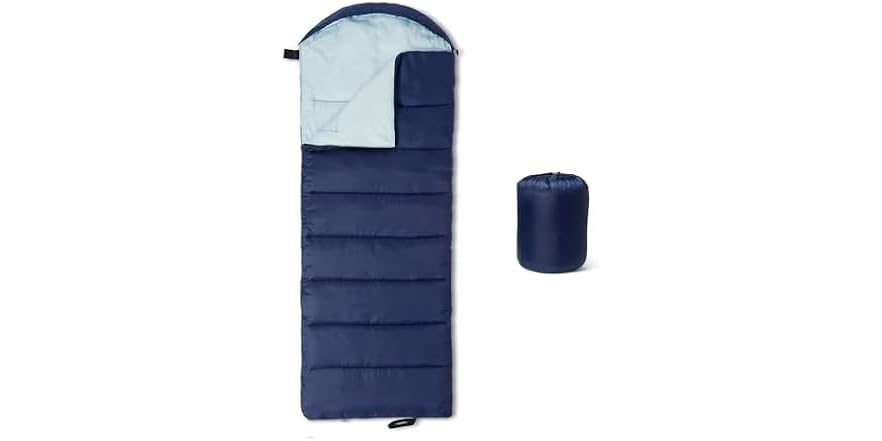
A deep deal has an explanation you can find: a clearance markdown, a new-customer code, a rebate, a loss leader. The deepest items on our own site this week are exactly that, a clearance tumbler and a code-only sleeping bag (see the cards below). They look like glitches, but there's a plain reason for each price.
The working rule: if you can explain the price, it's a deal. If you can't, it's probably a mistake, and you should treat the order as a maybe.
Where they surface
- Slickdeals. Most big ones show up first in its forums before spreading. Members use the phrase "price mistake" (on other forums, "possible PM"), and you can set a free Deal Alert on that phrase so you get an email or app push the moment a matching post appears. Slickdeals' own editors put the number of good price mistakes at roughly 10 to 15 a year (as of 2018), which tells you how rare the real thing is.
- Price trackers. CamelCamelCamel and Keepa send an email when an Amazon price falls below a target you set. Keepa can also alert on percentage drops and on specific sellers. A target set far below the normal price works as a crude mistake detector.
- Google Shopping. Its price tracking sends a push notification and an email when a tracked product drops below your target price.
- Clearance pages and store shelves. Online clearance sections are where bulk markdowns land, so they're worth a look during big sale weeks. In stores, a shelf tag that doesn't match the register is a different situation, and some states give you real rights there (see below).
- Here. The deals on DealSelected are checked before they're published. A price that's simply wrong is not what we're after, because it rarely ships.
The legal reality: the store usually gets the last word
Online, there's no general US law that makes a retailer honor a mistaken price. Whether a contract exists depends on contract law and the store's own terms, and those terms are written with exactly this situation in mind:
- Amazon's Conditions of Use say that if the correct price of an item sold by Amazon is higher than the stated price, Amazon will, at its discretion, either contact you for instructions before shipping or cancel the order.
- Walmart's Terms of Use reserve the right to cancel any order containing pricing errors "even after your receipt of an order confirmation or shipping notice."
So the confirmation email is a receipt, not a promise. When the 2013 Walmart.com glitch hit, a Consumer Reports editor summed up the reality: "it's the company's decision." Courts have tended to agree. In 2003 a Seattle small-claims judge sided with Amazon after it canceled about 6,000 orders for a $1,049 TV mispriced at $99.99. Part of her reasoning was that Amazon hadn't charged the card yet, because it charges when an item ships. Her summary: "If it's too good to be true, it's too good to be true." Contract law has a name for this, unilateral mistake. A seller can generally get out of an obvious error that the buyer knew, or should have known, was a mistake. The more absurd the price, the weaker your position.
In stores, a few states really do protect you. These laws are about the price at the register not matching the price displayed. If the shelf tag is the mistake, they can work in your favor:
| State | What the law gives you |
|---|---|
| Michigan (Scanner Law) | If an automated checkout charges more than the displayed price, notify the store in person or in writing within 30 days. It owes you the difference plus 10 times the difference, at least $1 and at most $5. The store has 2 days to pay. If it doesn't, you can sue. |
| Connecticut ("Get One Free" law) | If a consumable item (groceries, toiletries, paper goods and similar) rings up higher than its sticker or shelf price, you get it free, up to $20. If it rings up lower, you can buy one at the lower price. You have to point it out at checkout. |
| Massachusetts (grocery items) | You pay the lowest displayed price. If that's $10 or less, the first item is free. Above $10, you get $10 off the first one. There's an exception for gross errors, where the displayed price is less than half the checkout price and the store never meant to sell at it. |
None of these apply to online orders, and the bonuses cover one item, not a cartful.
Who has honored them, and who hasn't
What has happened before is the best guide to what will happen next. It's a guide, not a promise. A few well-documented cases:
| When | Retailer | The error | What happened |
|---|---|---|---|
| 2002 | Amazon | $1,049 TV listed at $99.99 | ~6,000 orders canceled. The buyer who sued lost in small claims |
| Aug 2009 | Best Buy | 52" Samsung TV at $9.99 | Orders canceled and refunded |
| Nov 2013 | Walmart.com | Monitors and projectors at ~$8.85 | Canceled under its terms, plus a $10 e-gift card. Some shoppers who chose in-store pickup reported getting the items |
| Jul 2018 | Amazon | Echo Spot at $0.00. Panasonic camera at $37.50 | The Echo Spots never shipped. At least some cameras did |
| Jul 2019 | Amazon (Prime Day) | Camera gear worth up to ~$13,000 at $94.48 | Mixed. Many buyers reported their orders shipping, while Amazon said it canceled most before they went out |
The pattern: big, obvious, widely shared errors at major retailers usually get canceled, sometimes with a small apology credit. Orders occasionally go through, mostly when they shipped before anyone noticed.
How to order one without losing anything
- Order fast, and pick the option that moves fastest. Good mistakes can disappear within minutes. Slickdeals' advice is to choose faster shipping, because an order that has already shipped is much harder to cancel. If the store cancels anyway, the shipping charge goes with it. In the 2013 Walmart glitch, some of the shoppers who got their items were the ones who chose in-store pickup.
- Don't contact the store to ask whether the price is right. All a chat or call does is get a person to look at the order, and checking it is how it gets corrected.
- Buy a normal quantity. Walmart's terms list "limitations on quantities" as a reason to refuse an order, and a cart with twenty of the same TV is the easiest order to flag. One, or a sensible household amount, is the order most likely to survive.
- Pay with a credit card. Many retailers only put a hold on your card until the item ships. If they cancel, the hold usually drops off within a few business days, though some banks take longer. If you were actually charged and the refund never shows up, the Fair Credit Billing Act gives you 60 days from the statement to dispute it. The steps are in our returns and chargebacks guide.
- Don't count on it until it ships. Don't promise it as a gift, and don't sell the thing it was replacing. Plan as if it will be canceled, and enjoy it if it isn't.
- Keep quiet until it arrives. Pre-selling an order you haven't received, or tagging the retailer about your $9 TV, doesn't help the order go through.
- Watch your statement after a cancellation. Make sure the canceled order wasn't quietly put through again at full price. If it was, that's a charge you never agreed to, and you can dispute it.
The bait version: fake "price mistakes"
Scam stores know how well "price glitch" works on people. A designer bag at 90% off on a site you've never heard of is almost never a mistake. It's the pitch.
| Signs it's a real mistake | Signs it's bait |
|---|---|
| A major retailer you already shop at | A store you've never heard of, usually found through a social-media ad |
| One or two items mispriced, everything else normal | The whole site is 70–90% off |
| Being discussed on deal forums, with people posting order confirmations | The only "proof" is the site's own countdown timer or reviews |
| Normal checkout with credit cards and PayPal | Pushes Zelle, wire transfers, crypto or gift cards |
| Domain has been around for years | Domain registered a few weeks ago |
| A real company with a customer service line and a return policy | No phone number, no return address, no company name |
Before paying an unfamiliar store anything, run the two-minute check in our fake store guide. Put the order on a credit card, which is your safety net if something goes wrong.
Where the line is
Ordering an item at the price a store published is legal, and the store keeps the right to say no. That's the whole deal on both sides. It does get murky when the "mistake" is something you engineered. Running the same one-per-customer code through several accounts, or deliberately exploiting a checkout bug, can break the store's terms and get accounts closed. Being rude to front-line staff over a cancellation also gets you nowhere, since they didn't set the price and can't override the terms. Treat a price mistake as a free lottery ticket: pay with a card, buy one, expect nothing, and be pleasantly surprised now and then.
Live on DealSelected right now
These are deep, but none of them is a mistake. Each one has a reason: a new-customer code, a clearance markdown, a promo code. Prices and availability update on the cards.

The short version: a real price mistake is a price with no reason behind it. Online, the store can almost always cancel it, so order fast, buy one, use a credit card and don't count on it until it ships. In stores, Michigan, Connecticut and Massachusetts give you real rights when the register doesn't match the shelf. The legitimate way to pay pennies is coupon stacking. If a price drops after you buy, use a price adjustment. For the dates of this year's sales, see our Black Friday 2026 guide. More of today's deals are below.
Related deals

Folgers Classic Roast Instant Coffee 8-Oz for $4.49 at Amazon (Reg. $9.49)
Amazon has Folgers Classic Roast Instant Coffee (8 oz) at $5.99 (reg. $9.49). Clip the 20% digital coupon and choose Subscribe & Save to bring it to about $4.49 shipped. Clip the on-page coupon Select Subscribe & Save (5-15% off) Cancel the subscription after the first delivery if you wish

Keurig K-Duo Gen 2 Hot & Iced Coffee Maker $103.99 at Kohl's (Reg. $260)
Kohl's has the Keurig K-Duo Gen 2 Hot & Iced single-serve and carafe coffee maker for $103.99 with code SAVINGS (regularly $260). You also earn $15 Kohl's Cash for every $50 spent. Shipping free on $25+; free store pickup may be available

Kayali Fragrance Sale: Up to 30% Off + Extra 10% with Code EXTRA10
Kayali is running a sitewide sale with up to 30% off fragrances, and the code EXTRA10 reportedly takes another 10% off. Yum Vanilla Cupcake is excluded. Apply code EXTRA10 at checkout Exclusion: Yum Vanilla Cupcake End date not stated; check the site

Calvin Klein Obsession Eau de Parfum for About $53 at Amazon (Reg. $95)
Calvin Klein Obsession Eau de Parfum for women is about $53 at Amazon with Subscribe & Save, down from $95, roughly 44% off. Spiced floral scent over an amber-musk base Free shipping with Prime or on $35+ The exact price shows at checkout (post lists $53.xx); you can cancel the subscription after the first order

Stove Top Savory Herbs Stuffing Mix 6-Oz for 83¢ at Amazon (Reg. $3)
Stove Top Savory Herbs Stuffing Mix (6 oz box) is 83¢ at Amazon, down from about $3, roughly 72% off. Seasoned bread stuffing ready in about 5 minutes Free shipping with Prime or on $35+ Stock up ahead of Thanksgiving

Hourglass Early Black Friday: 20% Off + Free 4-Pc Gift with $125 (Code BF20)
Hourglass takes 20% off its luxury makeup during the early Black Friday sale with code BF20. Orders of $125+ also get a free 4-piece gift while supplies last. Sale prices: Ambient Lighting Palette $60 (reg. $75), Unreal Liquid Highlighter $30.40 (reg. $38), Illusion Foundation SPF30 $48 (reg. $60) Free shipping on orders $50+ Sets, bundles and final-sale items are excluded Ends 11:59pm PT on 11/8
About the author
MiaLive well, save happily
Mia has lived in North America for years and can't see a full price without wanting to wait for a sale. She likes grocery runs, digging into credit card perks, stocking up on household basics and making home cozy. Her idea of a good day: something great at half price, or a hidden deal nobody else has spotted yet. Saving money isn't going without; it's spending on what's actually worth it.